Homeowners' pick for appliance repair across the Northeast
Chest and Upright Freezers
Fix it or replace it, that's the question, and the answer depends on the fault, the age of the unit, and whether we can still get the part. Your freezer is sweating, or the ice cream has gone soft, or there's a puddle under the chest lid in the garage. You've got a full load of food and a train to catch in the morning. Here's how we think it through, in plain terms.
Call (800) 967-1507- A real person answers
- Open 7 days
- Written quote before work starts
Taking calls until 5:00 PM ET
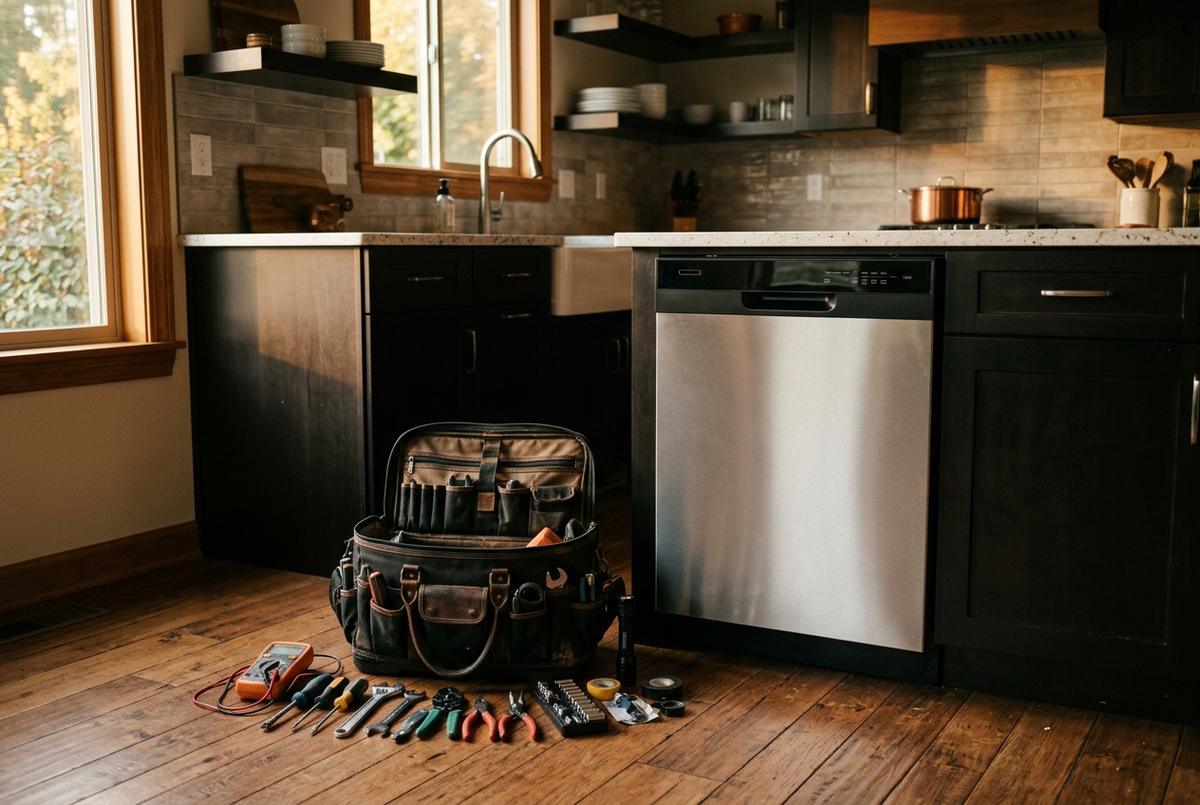
By our service team · vetted by the techs who do this daily
Age matters, but not the way you'd think
Age tells us two things: what parts are still made, and how the cabinet has held up. Sealed-system parts stay available a long while on chest units. Control boards and defrost timers on upright models get harder to source once a design is retired. Out here on the Island, salt air matters too. If the cabinet skin is bubbling with rust at the base, or the lid hinge has corroded through, that's cabinet damage, not a fault we can swap a part for. A ten-year-old freezer in a dry basement is usually a better candidate than a six-year-old one that lived in a shore-side garage.
The fault type tells most of the story
Some failures are straightforward. A bad door gasket, a stuck defrost thermostat, a failed evaporator fan, a cracked drain line, a lid switch that won't cut the light, these are parts we replace and the unit goes back to work. Others are heavier. A leaking sealed system means refrigerant loss, and finding the leak takes time. A seized compressor on a chest freezer is a big job. Neither one is impossible, but both change the math. When you call, describe what you hear and see. Humming with no cold, frost only on one side, water pooling at the front, water at the back. Those details point us at the fault before we arrive.
Parts availability decides more than people expect
We can diagnose almost anything. Getting the part is the other half of the job. Common gaskets, fans, thermostats, and relays are widely stocked across brands. Model-specific electronic controls on newer uprights sometimes go on long backorder. If a part is discontinued with no substitute, repair stops being an option no matter how simple the fault is. We check availability before recommending work, so you're not sitting with a dead freezer waiting on a shipment that never lands. If it isn't available, we say so on the visit and you can plan around it that same evening.
What we actually do on the visit
We start with your description. Then we check the basics: power at the outlet, door or lid seal, frost pattern, drain path, and whether the compressor is running or short-cycling. Hard water in parts of Nassau leaves scale on ice makers and drain tubes in combo units, so we look there too. We take temperature readings in the cabinet and at the coil. Then we tell you what failed, what it takes to fix, and how long parts will take. No work happens until you say go. If replacement is the smarter call, we'll say that plainly.
When replacing honestly wins
There are cases where we'd tell a family member to buy new. A rusted-through cabinet floor. Foam insulation soaked with water that no longer insulates, and you'll see condensation running down the outside walls constantly. A sealed-system failure on a small, older upright where the repair cost approaches a new unit. Several failures at once on a freezer that already runs loud and warm. We'd rather tell you that on the first visit than take work that leaves you calling again in six months. If it's worth fixing, we'll fix it. If it isn't, you'll hear that too. Call us and describe what it's doing.
When it is time to book
Related guides
Chest and Upright Freezers — fast answers
My chest freezer runs constantly but food is still soft. Is that fixable?
Often yes. Constant running with poor cooling usually points to a gasket leak, a frosted coil, a failed fan, or low refrigerant. The first three are routine repairs. We test to tell them apart before recommending anything.
There's frost building up inside my upright freezer. Do I need a new one?
Usually not. Heavy frost typically means a door seal that isn't closing, a defrost component that quit, or a blocked drain. All of those are common parts-level repairs on most upright models.
Can you come after I get home from work?
We schedule around commuter hours and offer evening appointment windows where our route allows. Tell us your earliest realistic arrival time when you call us and we'll work with it.
How it works
- Step 1
Tell us what it's doing
Describe the noise, the leak, or the error code on the panel. Brand and rough age help too. We use that to bring likely parts on the first trip instead of guessing in your kitchen.
- Step 2
Pick a window that works
Plenty of our neighbors leave before sunrise and get home after six. We schedule around trains and traffic, later slots included, so nobody burns a vacation day waiting on a repair van.
- Step 3
Diagnose, then repair
Our technician tests the machine, finds the failed part, and explains what's wrong in plain words. You approve the work before anything gets replaced. Most repairs finish during that same visit.
- A real person answers
- Open 7 days
- Written quote before work starts
Why homeowners call us
- Salt air is factored inCoastal humidity eats at terminals, brackets, and control boards. We look for corrosion behind the panel, not just the obvious broken part. Cleaned and protected connections help a repair hold up through another damp winter.
- Hard water knowledgeScale clogs dishwasher spray arms, coats heating elements, and stiffens water valves. If your dishes come out gritty or the washer fills slowly, mineral buildup is often behind it. We check for it every time.
- Wide service areaHomeowners across six Northeastern states call us for laundry, kitchen, and cooling work: refrigerators, freezers, washers, dryers, dishwashers, ovens, ranges, and cooktops. One number to call, whichever appliance quit on you.
- Straight talk on old unitsSometimes a repair makes clear sense. Sometimes the machine is worn past the point of value, and we say so. You get an honest read on the condition before you decide to fix or replace.
- All major brands, gas & electricOne independent crew for Whirlpool, Samsung, GE, LG, Maytag, Bosch and more.
- Straight answersIf replacing beats repairing, you hear it from us first.
About this guide
When the easy checks change nothing, it's time for a tech
Describe what you found and we'll take it from there. Booking takes about a minute.
- A real person answers
- Open 7 days
- Written quotes
- All major brands
- Gas & electric
Rather not call? Get a free quote →