Homeowners' pick for appliance repair across the Northeast
Repair or Replace a Washing Machine
Whether a washer is worth fixing comes down to what broke, not the year on the sticker, and we'll tell you which side yours falls on before any parts get ordered. Maybe yours is sitting full of water, or walking across the laundry room, or just clicking and doing nothing. You're in the basement doing the math on repair versus shopping. Fair question. Nobody wants to sink money into a machine that's already going. Here's how we think it through.
Call (800) 967-1507- A real person answers
- Open 7 days
- Written quote before work starts
Taking calls until 5:00 PM ET
By our service team · vetted by the techs who do this daily
Age matters, but not the way you'd think
A washer's age tells us what to expect, not whether to fix it. Machines under about eight years old usually have parts on the shelf and a body that's still solid. Past twelve years we look harder at the whole picture: how the drum bearings sound, whether the outer tub shows rust, how the wiring looks. On Long Island, salt air matters. Homes near the water get corrosion on brackets, hinges, and screw heads years earlier than inland homes do. A ten-year-old washer in a dry inside laundry closet can be a better repair candidate than a six-year-old unit sitting in a damp garage a block from the bay.
The fault type tells us more than the year on the label
Some failures are routine. Drain pumps clog with coins and hair. Lid switches and door locks wear out. Inlet valves stop opening because hard water leaves scale in the screens, and belts stretch. Control boards fail, though they often swap out cleanly. Those are the calls where repair makes plain sense. Other failures run deeper. A spun bearing in the outer tub, a cracked spider arm on a front loader, or a rusted-through tub means major disassembly and several large parts at once. Same washer, very different answers. So the first thing we want to know isn't the age. It's what actually broke.
Parts availability is the quiet deal-breaker
We can fix almost any mechanical problem if the part exists. Sometimes it doesn't. Discontinued models, off-brand imports, and machines from lines that got pulled from the market can leave us with a good diagnosis and nowhere to order from. We check availability before we recommend anything, so you're not waiting weeks on a back-ordered board. If a part is obsolete, or only available used with no way to verify condition, we tell you straight. That's a case where replacement is the honest answer, even when the repair itself would have been simple.
What we actually do on the visit
We run the machine if it can run. We listen during fill, agitation, and spin, because each stage points at different components. We check the drain line, the inlet screens, and the leveling feet, and we look at the tub for scale buildup and rust at the seams. Then we test the failed component instead of guessing at it. When we're done you get a plain description of what's wrong, what it takes to fix, and how the rest of the machine looks. If we'd walk away from it ourselves, we say so. Evening and after-work appointments are available. Call us and we'll work around your commute.
Cases where replacing honestly wins
Two or three unrelated major failures at once on an older machine. A rusted outer tub or a cracked drum. Water damage to the control area from a long slow leak. A model with obsolete parts. Or a washer you already dislike, one that never handled your load size or that shakes your floor joists. We're not going to talk you into a repair on a machine you were ready to let go. There's also the everyday math. If hard water scale has been chewing through valves and heating elements over and over, a repair fixes today's symptom but not the pattern. A softener or filter may matter more than the next part.
Repair or Replace a Washing Machine — fast answers
Is it worth fixing a washer that leaks?
Usually yes. Most leaks trace back to a hose, a pump, a door boot, or a loose clamp, and all of those are replaceable. Leaks from a cracked or rusted tub are a different story, and that's when we start talking about replacement instead.
My washer won't spin. Big problem or small?
Could be either. A worn belt, a failed lid switch, or a clogged drain pump are common and straightforward. A seized bearing is a much larger job. We diagnose it before recommending anything so you're not guessing.
Can I check anything safely before calling?
Yes. Confirm the machine has power and the outlet works. Check that both water valves are fully open, and make sure the drain hose isn't kinked. Level the machine with a hand on each corner. Skip anything behind a panel.
How it works
- Step 1
Tell us what it's doing
Describe the noise, the leak, or the error code on the panel. Brand and rough age help too. We use that to bring likely parts on the first trip instead of guessing in your kitchen.
- Step 2
Pick a window that works
Plenty of our neighbors leave before sunrise and get home after six. We schedule around trains and traffic, later slots included, so nobody burns a vacation day waiting on a repair van.
- Step 3
Diagnose, then repair
Our technician tests the machine, finds the failed part, and explains what's wrong in plain words. You approve the work before anything gets replaced. Most repairs finish during that same visit.
- A real person answers
- Open 7 days
- Written quote before work starts
Why homeowners call us
- Salt air is factored inCoastal humidity eats at terminals, brackets, and control boards. We look for corrosion behind the panel, not just the obvious broken part. Cleaned and protected connections help a repair hold up through another damp winter.
- Hard water knowledgeScale clogs dishwasher spray arms, coats heating elements, and stiffens water valves. If your dishes come out gritty or the washer fills slowly, mineral buildup is often behind it. We check for it every time.
- Wide service areaHomeowners across six Northeastern states call us for laundry, kitchen, and cooling work: refrigerators, freezers, washers, dryers, dishwashers, ovens, ranges, and cooktops. One number to call, whichever appliance quit on you.
- Straight talk on old unitsSometimes a repair makes clear sense. Sometimes the machine is worn past the point of value, and we say so. You get an honest read on the condition before you decide to fix or replace.
- All major brands, gas & electricOne independent crew for Whirlpool, Samsung, GE, LG, Maytag, Bosch and more.
- Straight answersIf replacing beats repairing, you hear it from us first.
About this guide
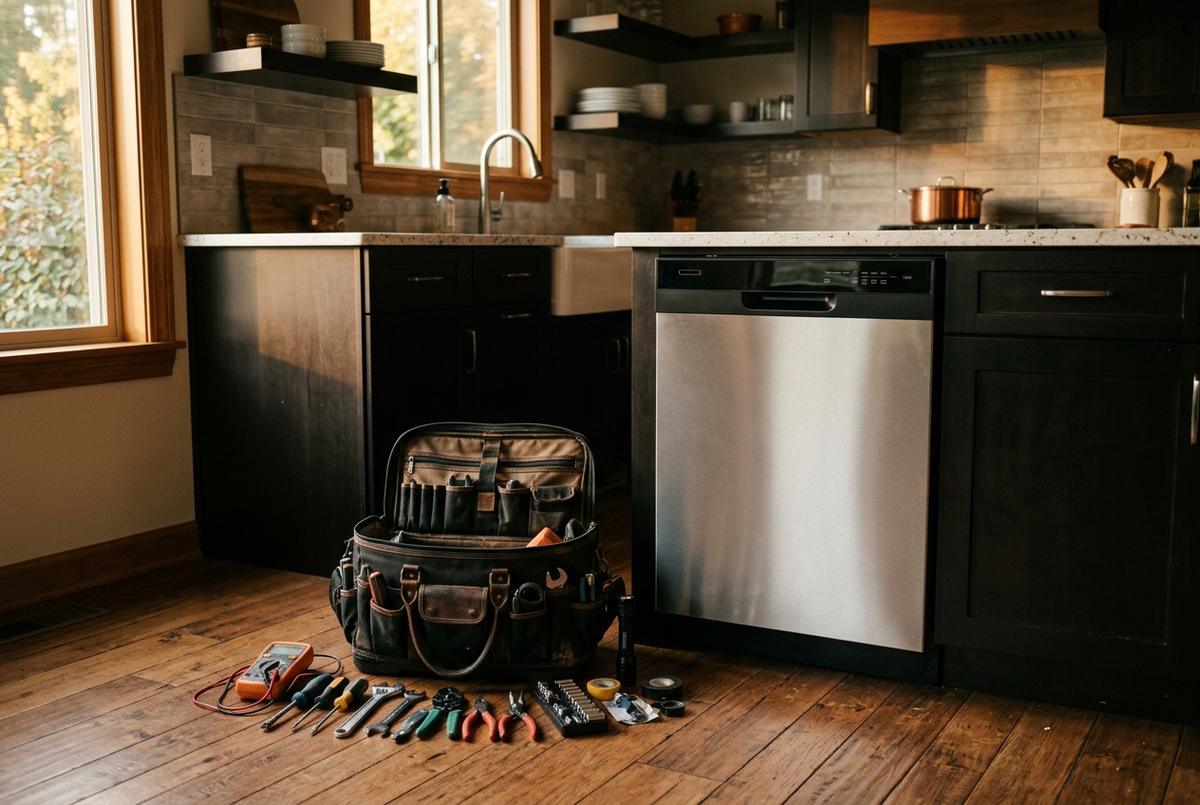
Past the safe checks, it's a job for tools and a meter
Mention which checks you ran when you book; it speeds up the visit.
- A real person answers
- Open 7 days
- Written quotes
- All major brands
- Gas & electric
Rather not call? Get a free quote →